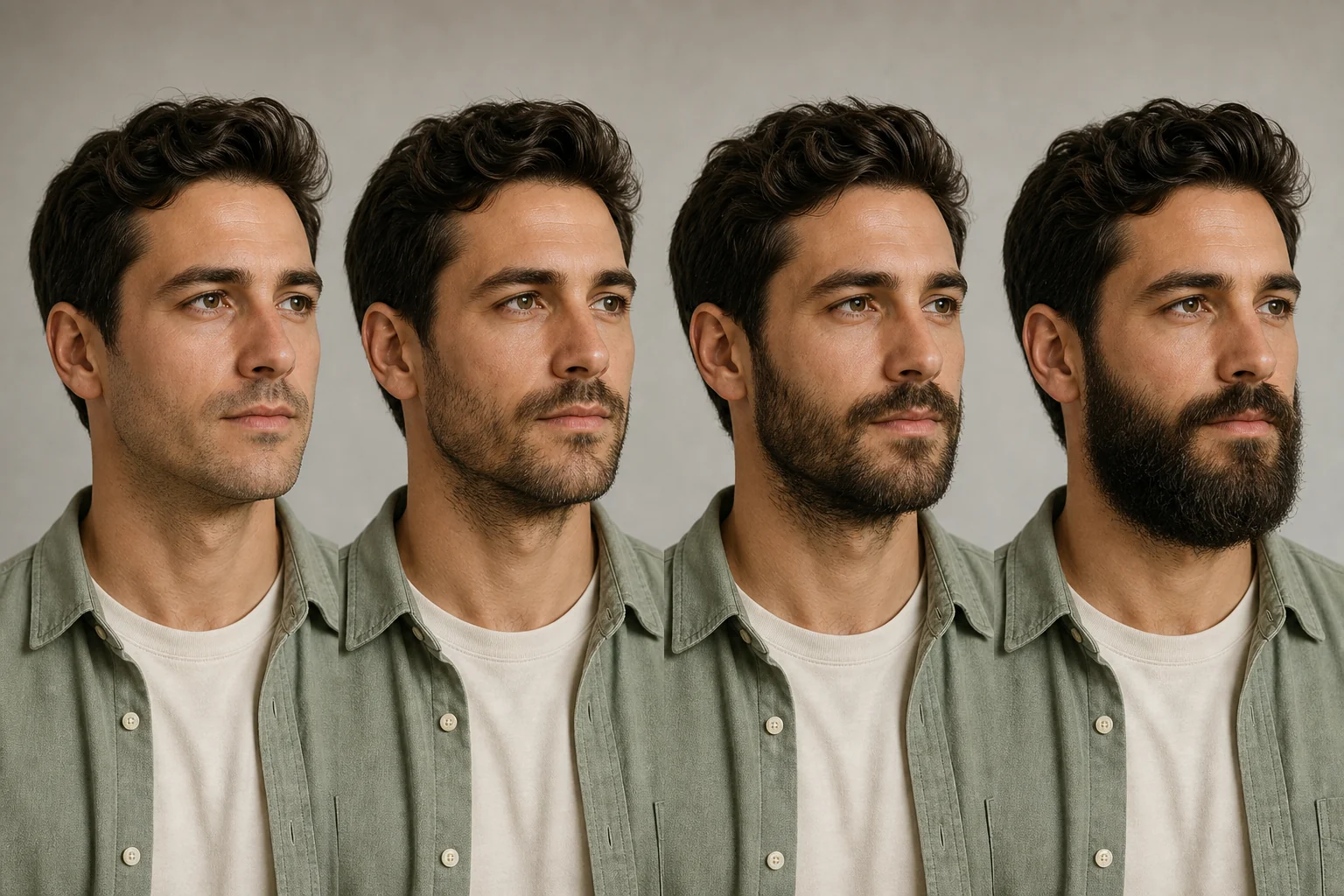
Beard growth feels slow because the most important changes happen gradually. In the first one or two weeks, you mainly see stubble. By the end of the first month, the growth pattern becomes clearer. After that, shape and density improve more through patience and trimming choices than through dramatic day-to-day growth.
Weeks 1 to 2
This stage is about texture and irritation. Many men feel itch, dry skin, or uneven early coverage. That does not mean the beard has failed. It only means the beard is still too short to show its longer pattern.
Weeks 3 to 4
You can usually judge:
- whether the cheeks are dense or patchy
- how strong the mustache is
- whether the chin grows faster than the sides
This is often when people trim too early. Unless the shape is very messy, it helps to wait a little longer before making major decisions.
Weeks 5 to 8
This is when many beards start looking intentional. Weak areas may begin to blend better, and chin length may start balancing the face. It is also the point where you can decide whether to keep growing, refine a short beard, or shift to a style that suits your growth pattern better.
What changes the timeline
Growth speed and coverage depend on genetics, age, hormones, and grooming habits. Good care cannot rewrite genetics, but it can prevent breakage, reduce irritation, and help the beard look stronger while it grows.
The useful expectation
If you want an honest read on your beard, give it at least four to six weeks. If you want style options beyond stubble, expect more like six to ten weeks. The final look comes from both growth and the decisions you make once enough hair is there to shape.
Replace the universal timeline with milestones
No calendar can guarantee coverage. A more reliable plan tracks visible milestones:
| Milestone | What you can evaluate | What to postpone |
|---|---|---|
| Consistent stubble | Growth direction and strongest zones | Final cheek and chin shape |
| Connected short coverage | Whether the jaw, chin, and mustache form one outline | Long-beard taper or point |
| Shapeable short beard | Neckline, side volume, and practical upkeep | Judging the final density of a long beard |
| Medium movement | How the hair falls after washing and drying | Cutting every temporary flyaway |
Take one front photo and two profile photos every seven days in the same lighting. Memory exaggerates slow weeks and hides gradual changes; a photo series makes the pattern easier to evaluate.
A six-week observation plan
- Week 1: keep the skin clean and avoid changing the outline.
- Week 2: record growth direction at the neck, cheeks, chin, and mustache.
- Week 3: clear only obvious hairs far outside the intended beard area.
- Week 4: compare density from the front and both sides; do not judge only the strongest angle.
- Week 5: choose a realistic family such as short beard, goatee, or patchy beard style.
- Week 6: set a conservative neckline and make the first small shape correction.
If your goal is a long beard style, six weeks is an observation point rather than a finish line. Continue tracking the same measurements and let the lower silhouette develop before sculpting a taper.
What grooming can and cannot change
Cleaning, conditioning, gentle detangling, and avoiding repeated over-trimming can help existing hair remain comfortable and reduce preventable breakage. They do not create new follicles or guarantee that an open area will fill. Be cautious with before-and-after claims that attribute normal time, lighting, or longer neighboring hairs to one cosmetic product.
The American Academy of Dermatology's patchy beard guidance recommends letting nearby hair grow to overlap sparse areas and choosing a style that works with the actual pattern. It also advises speaking with a dermatologist before trying minoxidil on the face.
For ordinary care during the observation period, the AAD's healthy beard guide covers gentle cleansing, moisturizing by skin type, and cleaning grooming tools. Those steps support comfort and breakage prevention; they do not establish a faster biological growth rate.
When the problem is not a styling timeline
Sudden hair loss, broken skin, painful bumps, or a changing lesion beneath the beard should not be explained away as a slow growth phase. The same AAD guidance recommends professional evaluation for persistent skin problems or hair loss. hairforge cannot diagnose the cause from a photo or predict future density.
For normal grooming decisions, use the beard style finder after enough growth is visible, then test the suggested outline with a longer guard before cutting shorter.
Common timeline mistakes
- Comparing one cheek with another person's finished beard.
- Trimming the slowest area every few days and never letting it overlap.
- Measuring immediately after stretching or combing curly hair straight.
- Switching products and routines so often that no change can be evaluated.
- Treating a generated preview as a prediction of biological growth.
hairforge Editorial reviewed this article for realistic uncertainty, clear observation steps, and the separation between styling advice and medical claims.