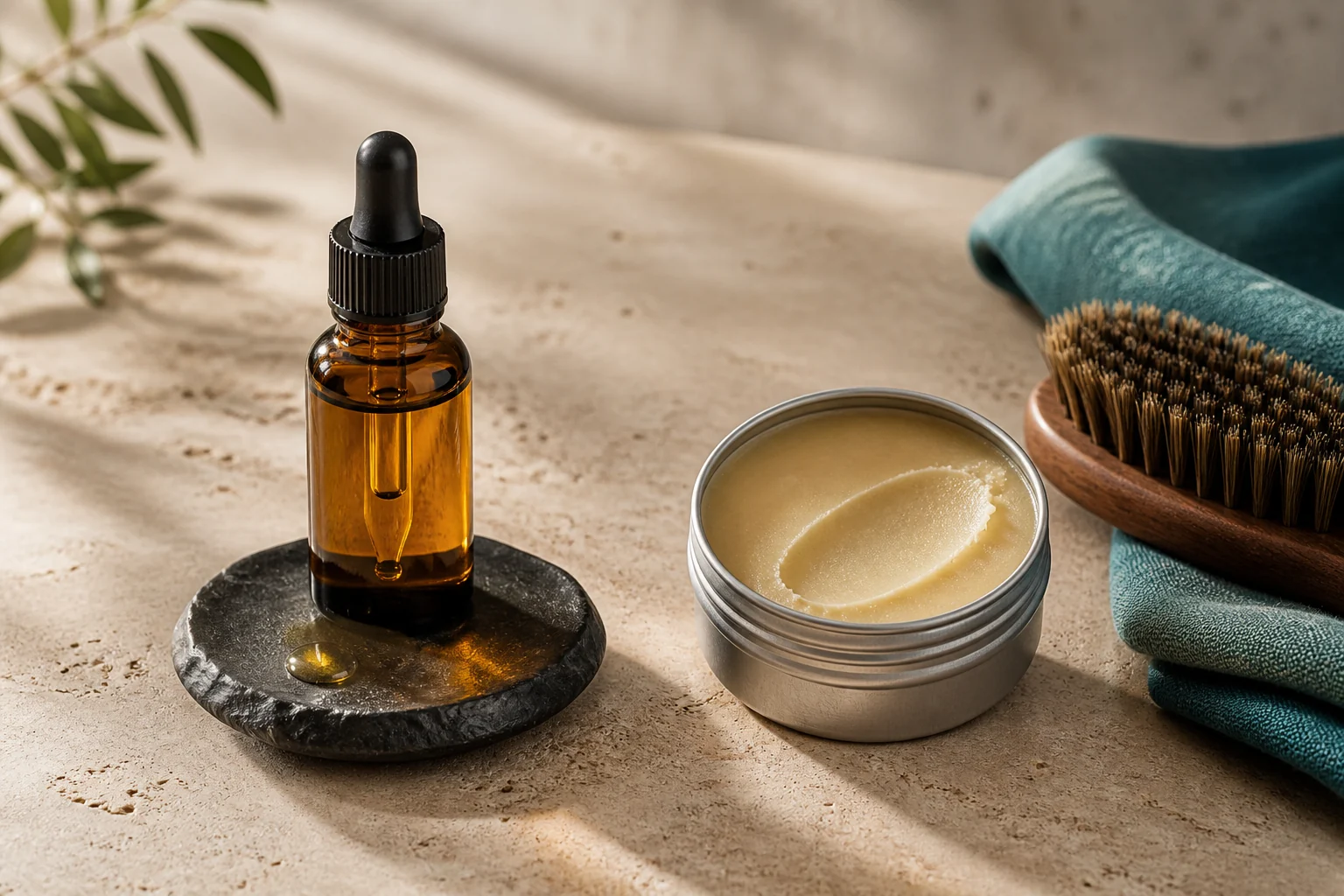
Beard oil and beard balm solve different problems. If your skin feels dry, itchy, or flaky, beard oil is usually the first product to fix. If your beard looks messy, puffs out at the sides, or needs a little control during the day, beard balm is often the better fit.
Use beard oil when hydration is the priority
Beard oil is made to soften the hair and condition the skin underneath. That matters most in the early growth stage, when short whiskers can feel sharp and irritating.
Oil is usually the better choice when:
- your beard feels rough or dry
- the skin under your beard gets tight or itchy
- you live in a dry climate
- your beard is short to medium length
Apply a few drops after washing or showering, while the beard is still slightly damp. Work it through the skin first, then spread the rest through the beard.
Use beard balm when control is the priority
Beard balm usually contains oils, butters, and waxes. That combination gives a beard more structure than oil alone. It will not feel like a heavy styling product, but it can reduce flyaways and keep the beard looking neater.
Balm is often the better choice when:
- your beard has medium to long length
- the sides flare out during the day
- you want light hold without stiffness
- you want the beard to look denser and more intentional
Warm a small amount between your palms, then press it through the beard and shape with a comb or brush.
Many routines work better with both
You do not always have to choose one product forever. A common routine is:
- Use beard oil after washing to keep the skin comfortable.
- Add a small amount of balm only when the beard needs structure.
That works especially well for medium beards, where dryness and styling control often show up at the same time.
Avoid the most common mistake
The usual mistake is using too much product. Too much oil can make the beard look greasy. Too much balm can make it feel heavy and collect dust or lint.
Start with less than you think you need:
- short beard: 2 to 3 drops of oil
- medium beard: 3 to 5 drops of oil
- balm: a pea-size amount, then add more only if needed
The quick answer
Choose beard oil if your main issue is dryness, itch, or softness. Choose beard balm if your main issue is hold, shape, or flyaways. If your beard is medium length or longer, using both in small amounts is often the simplest solution.
Oil versus balm at a glance
| Decision | Beard oil | Beard balm |
|---|---|---|
| Main role | Lightweight conditioning and slip | Conditioning plus light shape control |
| Best starting point | Short hair, dry-feeling skin, or a low-shine routine | Medium or long hair, flyaways, or a defined silhouette |
| Common failure | Applying enough to leave visible residue | Using waxy hold to force hair into an unsupported shape |
| How to adjust | Reduce drops or apply only to damp skin and hair | Warm a smaller amount fully before adding more |
The table is a selection shortcut, not a promise about ingredients. Formulas vary. Read the ingredient list and directions on the actual product rather than assuming every bottle labeled “oil” or “balm” behaves the same way.
A simple two-week product test
Change one variable at a time so you can tell what helped.
- Photograph the beard in the same light before starting.
- For the first week, use only a small measured amount of oil after washing.
- Record comfort, visible residue, softness, and whether the beard holds its outline.
- In the second week, keep the wash routine the same and add a small amount of balm only where shape control is needed.
- Stop using a product if it causes burning, swelling, a rash, or persistent irritation, and seek professional advice when symptoms are significant.
This test is more useful than switching products every day. It also makes it easier to decide whether your real problem is product choice, excessive quantity, an inconsistent beard-washing routine, or a trim that no product can correct.
Match product to beard length and style
For short beard styles, start with minimal product because the skin remains visible and residue is easy to notice. For a full beard, work a small amount through the hair in sections rather than coating only the surface. A shaped ducktail beard may need balm around the taper, while the skin beneath can still benefit from a separate lightweight moisturizer or oil chosen for your skin type.
Products do not create new follicles or permanently fill a patch. If uneven coverage is the main concern, use our patchy beard guide to choose a workable outline before buying stronger hold.
Common mistakes to avoid
- Treating “natural” as proof that a formula cannot irritate skin.
- Adding essential-oil fragrance without checking the complete ingredient list.
- Applying balm to a wet beard and then judging the final hold too early.
- Using product buildup to compensate for a neckline or cheek line that needs trimming.
- Making hair-growth or medical claims from a cosmetic product description.
Sources and review notes
The American Academy of Dermatology beard-care guide explains that product choice should consider skin type and beard length. The FDA cosmetics safety guidance recommends reading the full label and following warnings, while its fragrance guidance notes that fragrance formulas can contain multiple ingredients and may matter to people with sensitivities.
hairforge Editorial reviewed this comparison for ingredient-claim restraint, repeatable testing steps, and consistency with the site's care guides. It is grooming information, not diagnosis or treatment advice.